Amazonite
Brazil, Russia, China · 1 specimens · 21.6ct avg

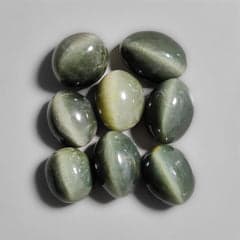

Amazonite is a green to blue-green variety of microcline feldspar, often showing a mottled or streaky pattern of white feldspar veins. It has a vitreous luster, Mohs hardness of about 6–6.5 and typically a translucent to opaque appearance, making it ideal for cabochons, beads and carved decorative pieces rather than high-transparency faceting.
Price History
Listings
Specimen Data
Value Drivers
Carat weight plays a modest role: large pieces are relatively common, but thick, crack-free slabs with uniform color suitable for wide bracelets or statement carvings are less abundant and can command higher prices. For normal cabochon sizes, size differences within the 1–10 ct range have limited pricing impact compared to color and pattern.
Color is the primary driver of value. Strong, evenly distributed teal to blue-green hues with minimal grayness and attractive white streaks are preferred; pale, washed-out or blotchy material is common and low-priced. Deep, vivid ‘classic' amazonite from high-quality localities is noticeably more valuable than generic green feldspar.
Because amazonite is typically translucent to opaque, clarity is assessed more by freedom from cracks and coarse pits than by transparency. Pieces with solid structure, smooth polish and minimal surface fissures or chalky areas are favored, while heavily fractured material often ends up in low-value tumbled stone mixes.
Cutting focuses on orientation and surface finish. Cabochons are usually cut to show the most saturated face-up color and to integrate or frame the white vein pattern aesthetically. High-domed, well-polished cabs or imaginative carvings can add value, but overly flat, poorly finished pieces are abundant and cheap.
Market Dynamics
Amazonite is mined in several countries, including Brazil, Russia, the United States, Madagascar and Ethiopia. While fine material from specific localities can be limited, overall global supply is ample, and the stone is not considered rare in commercial qualities.
Demand is driven by its attractive color, affordability and strong presence in metaphysical and ‘stone of courage/peace' niches. It is also popular in bohemian-style silver jewelry and bead strands, where buyers value color and vibe more than gem rarity.
Recent commentary points to stable demand for amazonite in fashion jewelry and crystal-healing spaces, with social media exposure supporting steady consumption. Prices remain moderate overall, with only minor premiums for exceptionally colored or branded origin material.
News
No news coverage yet
Insights
Amazonite is a variety of potassium feldspar microcline and shares its basic chemistry with common feldspar used in ceramics and glass.
Historically, amazonite has been found in ancient Egyptian jewelry, showing that its attractive blue-green color has been valued for millennia.
The stone often shows a subtle grid-like pattern under magnification due to polysynthetic twinning typical of microcline feldspar.
Amazonite may show weak olive-green fluorescence under UV, but this has little impact on its commercial value compared to color and pattern.
Because it cleaves and can be brittle along certain directions, cutters usually opt for protective mountings and avoid very thin or pointed designs.
In metaphysical marketing, amazonite is frequently promoted as a ‘peacemaker' stone associated with harmony, communication and calmness, supporting demand far beyond its inherent rarity.
Have a Amazonite?
AI identification, grading, origin detection & market valuation