Morganite
Brazil, Madagascar · 9 specimens · 5.1ct avg

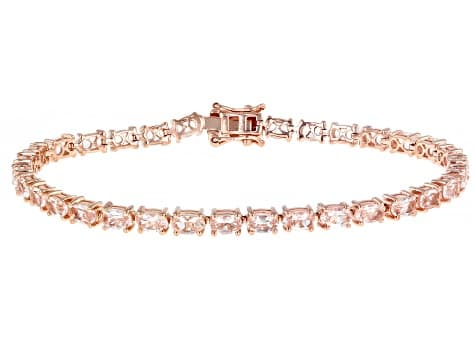

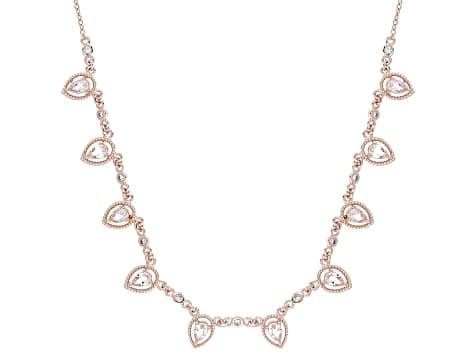

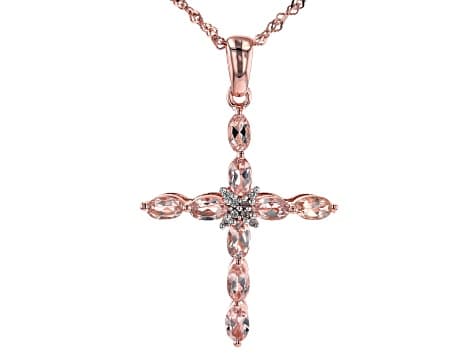
Morganite is known for its delicate pink to peach hues, which can range from soft pastels to vibrant shades. It has a hardness of 7.5 to 8 on the Mohs scale, making it suitable for everyday wear, and is commonly cut into faceted shapes that enhance its brilliance.
Price History
Quality Tiers
Listings
Specimen Data
Value Drivers
Carat weight significantly influences Morganite pricing, with a median price of $200 per carat. Larger stones tend to command higher prices, as evidenced by the P10-P90 spread of $83 to $784 per carat.
Color is a crucial factor in Morganite pricing, with deeper pinks and peach tones generally fetching higher prices. Stones with a more saturated color are particularly sought after, while lighter shades may be less valuable.
Clarity impacts Morganite pricing, though this variety can tolerate some inclusions without significant loss of value. Higher clarity stones, particularly those that are eye-clean, tend to be more desirable and command premium prices.
The quality of the cut affects how well Morganite reflects light, with well-cut stones exhibiting superior brilliance. Shapes that maximize the stone's color and clarity, such as round or oval cuts, can enhance market value.
Market Dynamics
The current supply of Morganite is primarily sourced from India, Thailand, and China, with India being the dominant origin. This distribution suggests a stable supply chain, although potential tariffs could impact future availability.
Demand for Morganite is driven by its popularity in jewelry design, particularly for engagement rings and fashion pieces. Additionally, its appeal as a collector's item has grown, attracting both casual buyers and serious investors.
Morganite prices have shown a slight upward trend recently, influenced by market sentiment shifting positively. Concerns over potential new tariffs on colored gemstones may also be contributing to rising prices.
News
Insights
The mean price per carat for Morganite is $262, indicating a healthy market for this gemstone.
Recent market activity has seen a 5.5% increase in Morganite prices over the last month.
The P10-P90 spread of $83 to $784 highlights the variability in pricing based on quality and size.
Morganite's appeal is bolstered by its association with love and compassion, making it a popular choice for sentimental gifts.
Morganite's hardness and toughness make it suitable for engagement rings, provided settings protect the stone from severe knocks and abrasion.
Large, well-cut morganite gems are frequently featured in high-jewelry designs, often accented by diamonds to enhance contrast and sparkle.
Have a Morganite?
AI identification, grading, origin detection & market valuation