Scapolite
Tanzania, Brazil · 1 specimens · 4.8ct avg

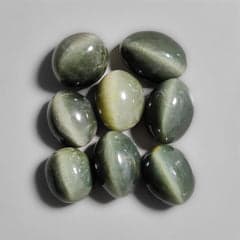

Scapolite is a group of rock-forming minerals (marialite–meionite series) that can occur in transparent, gem-quality crystals. Gem scapolite ranges in color from colorless and yellow to violet, pink, brown and gray. With Mohs hardness about 5.5–6 and distinct cleavage, scapolite is somewhat soft and brittle, making it better suited to occasional-wear jewelry.
Price History
Listings
Specimen Data
Value Drivers
Carat weight is significant because larger, clean scapolite gems are less common. While crystals can sometimes be sizable, faceted stones above 5 carats with good color and clarity are valued by collectors and designers.
Color is a primary value factor. The most desirable scapolite colors include saturated golden yellow and attractive violet or lilac hues. Colorless scapolite is less valuable unless exceptionally pure and large. Pale or muddy colors command lower prices.
Scapolite often contains inclusions, fractures and cleavage-related features. Faceted stones with good transparency and minimal eye-visible inclusions are more desirable, particularly in larger sizes. Some scapolite can show cat's-eye chatoyancy when cut en cabochon, in which case a sharp eye and strong bodycolor are prized.
Cutting scapolite requires care due to cleavage and brittleness. Well-cut gems balance brilliance and color while minimizing the risk of breakage. Mixed cuts, ovals and cushions are common; cabochons are used for cat's-eye stones. Poor cutting can exacerbate durability issues and diminish visual appeal.
Market Dynamics
Gem-quality scapolite occurs in metamorphic and igneous rocks in regions such as Tanzania, Madagascar, Brazil and Burma. Production is small-scale, and scapolite is typically a minor by-product of mining other gem species.
Demand is niche, mainly from gem collectors and boutique designers interested in less common species. Scapolite does not have the broad consumer recognition of mainstream gems but can find a market in unique, custom jewelry.
Recent Trends: niche but stable collector interest, with fine, well-documented stones achieving strong prices through specialist dealers and auctions.
News
No news coverage yet
Insights
The name 'scapolite' comes from Greek words meaning 'rod stone,' referencing its typical prismatic crystal habit.
Purple and violet scapolite can resemble amethyst but is softer and less well-known, appealing primarily to collectors.
Scapolite cat's-eye gems, though rare, are prized for a sharp, centered eye and strong bodycolor.
Because scapolite has distinct cleavage, jewelers must take care when setting and wearing to avoid chipping.
Heat treatment can sometimes improve scapolite color and clarity, though this is less widely documented than for more commercial gems.
Scapolite's relative obscurity means it often offers good value for size and color compared with more famous gemstones.
Have a Scapolite?
AI identification, grading, origin detection & market valuation